

company profile
LOVEMUSIC(TIANJIN)CO.,LTD is a musical instrument manufacturer with 24 years of production experience. It is a comprehensive musical instrument manufacturer with a complete range of products, which are exported to many countries such as Africa and South America and are well received.
Quality Assurance
we have formed our own set of production system, from research and development to production, we strictly control every production process, and make every detail as perfect as possible.
Honors
Our products won the first art award and passed the European Union's CE certification. We are a trustworthy musical instrument manufacturer.
Various Typesour
We are a comprehensive musical instrument factory with a complete range of products,OUR main products include drum set, electronic keyboard, guitar, electric guitar, violin, accordion and music stand, musical bag&cases and so on.
Customized according to needs
Customized instruments can be ordered wholesale。OEM customization available.We can produce samples first, and then mass production after customer satisfaction
-
![Handmade Violin]() Add to Inquiry
Add to Inquiry -
![Professional Handmade Violin]() Add to Inquiry
Add to Inquiry -
![Colorful Popular Carbon Fiber Violin]()
Colorful Popular Carbon Fiber Violin
Add to Inquiry -
![Student Entry Level Violin]() Add to Inquiry
Add to Inquiry -
![Tiger Stripe Violin]() Add to Inquiry
Add to Inquiry -
![Maple Violin]() Add to Inquiry
Add to Inquiry -
![Full Size Master Violin]() Add to Inquiry
Add to Inquiry -
![Fully Hand Made High Quality Violin]()
Fully Hand Made High Quality Violin
Add to Inquiry -
![Handmade German Violin]() Add to Inquiry
Add to Inquiry -
![High Quality Solid Wood Violin]()
High Quality Solid Wood Violin
Add to Inquiry -
![Musical Instruments Deviser Matt Violin]()
Musical Instruments Deviser Matt Violin
Add to Inquiry -
![Spruce Violin]() Add to Inquiry
Add to Inquiry


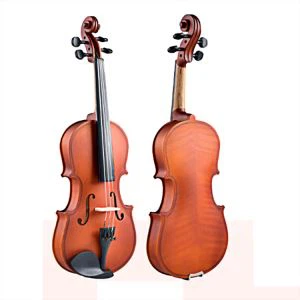


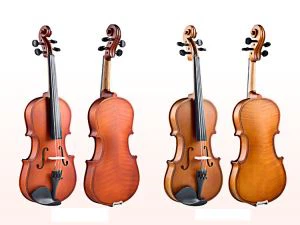

Characteristics of the violin
Our Products

A violin with super penetrating power

Clean, round sound without noise

The body paint has strong adhesion, clear and transparent color, and smooth appearance
1 Bright sound:The violin is a stringed instrument with four strings. The friction between the strings and the bow generates vibrations. The vibrations are then transmitted to the back plate through the sound pillars in the resonance box (body). The resonance generated by these parts emits a harmonious and bright sound. The sound of the piano.
2 Body material:The violin body (4/4 size) is about 35.5 cm long [9] and is made of a curved top, back and side panels. The top is usually made of spruce, which has a softer texture; the back and side panels are made of maple or mahogany, which has a harder texture. The headstock and neck are made of solid maple, and the fingerboard is made of ebony.
3 important musical instrument:The violin is widely spread in countries around the world and is the most important instrument in the string section of modern orchestras. It occupies a very important position in instrumental music and is the backbone of the modern symphony orchestra. It is also a solo instrument with difficult performance skills. It is also known as the three major musical instruments in the world along with the piano and classical guitar.
Characteristics of cello


1. Rich sound:The cello is a Western musical instrument. It is an indispensable tenor or bass string instrument in the orchestra. It is a lower middle-range instrument in the violin family of instruments. The cello has a rich and rich tone and a cheerful personality. It is good at playing lyrical melodies and expressing deep and complex emotions. It also plays the bass part of the harmony together with the double bass, so it is known as the "lady of music".
2.important musical instrument: Cello was originally spelled Violoncello in Italian, and later gradually shortened to Cello. Known for its warm and rich tone, the cello is one of the most common instruments in symphony orchestras. It is suitable for playing various roles: sometimes it joins the bass camp and releases a heavy sigh in the lower part; sometimes it plays the role of the rhythmic backbone with the two middle strings.
3.Beautiful and unique melody:The most glorious moment of the cello comes when the composer gives it the mission of expressing cantabile melodies. The entire cello section produced a melody that dwarfed any other instrument in the symphony orchestra.
Characteristics of double bass


1 Unique appearance:The double bass is one of the Western string instruments, and it is also the instrument with the lowest sound in the string section of the modern symphony orchestra. There are obvious differences between the double bass and other instruments in the string group (violin, viola, cello): the shape of the double bass is more derived from the viol, and is different from the shape of the other three types of violins. For example, in the shoulder part, the double bass has an oblique shape, while the other three types of violins have a rounded shape;
2.Body features:The bow of the double bass can use the evolved type of Viol bow (now called a German bow, which needs to be held in the back, similar to the Chinese huqin) , you can also use a cello-like bow (now called a French bow). The other three types of violins can only use the latter bow.
3.Playing style:The double bass is the only string instrument in a symphony orchestra in which the principal player does not sit in front of the conductor. The double bass is the only symphonic string instrument that only uses three fingers to fret the strings in the low position. The distance between the positions is too large, making it impossible to use all four fingers evenly. The double bass is the only symphonic string instrument that holds a standard position in jazz.
Advantages of string instruments
Handmade with exquisite craftsmanship
1、Maple wood violin, standard gauge height for easy string pressing. Precise sound hole, ideal pronunciation
2、Handmade professional violins of all kinds, with hand-oiled varnished bodies, beautifully painted, high-end luxury;
3、Hand-carved headstock with precisely positioned string holes;
4、The hand-polished saddle is smooth and will not warp, and the high-strength tail plate has high tensile strength;
5、Solid and stable fretboard and powerful and reliable scales;
6、The balance has been hand-polished many times and has excellent sound transmission;
7、The cello is lined with sheets, which are smooth inside, resonant and noise-free;
8、Grooved by hand, the grooves are fine and of the right depth to suit the seasons and increase pressure on the edges of the board, and the fingerboard is hardened to relieve the stress caused by wear and tear on the strings.
Good sound quality:The violin has a bright and sweet tone and a delicate and warm feel. The bass of the cello is deep and the treble of the violin is loud. Due to the good resonance effect, the tone is soft and long-lasting, giving people a sense of aesthetic enjoyment. The sound is pure and noise-free, and the pitch is tuned by a professional luthier before leaving the factory to ensure beautiful and dynamic sound quality.
Good raw materials:
1. The tiger stripe handmade violin is made of spruce top, which has clear and dense wood grain, good resonance and good vibration transmission. The inlaid lines are beautiful and prevent the board from cracking due to thermal expansion and contraction.
2 solid wood electric cello, made of high-quality maple wood, which is strong and light enough to withstand the pressure of the body;
3. The ebony fingerboard of the cello is corrosion-resistant, oxidation-resistant, and will not fade;
4. The tail piece of the electric cello is made of high-quality stainless steel hardware;
The metal main shaft and thicker tail piece of the 5-bass are not easily deformed and cracked, and the backboard is made of one of the few high-quality woods selected from thousands of naturally dried woods.
Environmentally friendly and durable:Our various violins are made of well-selected materials and are exquisitely crafted. Their bodies are strong, lightweight and not easily deformed, are durable and environmentally friendly.
Clever design:The tiger-striped violin, has a unique headstock shape that adds to the spirit of the instrument. Ergonomically designed cheek rest, non-slip and tactile; multiple electronic cellos are lightweight and easy to carry.
Complete specifications:Cello and violin are made according to international standard drawings, with good craftsmanship and smoother feel. Full size violins cater to all heights and ages.
What are the differences between acoustic and electric cellos?
Pronunciation principle
The pronunciation principle of the electronic cello is a wireless carrier transmission pronunciation principle that combines electronic technology with traditional musical instruments. The cello is pronounced through the cavity body of the resonator.
Sound amplification
An electronic cello does not require an internal resonance box, while a cello does.
How to play
The electronic cello can be played by a touch panel or an electronic keyboard, while the cello requires a bow or fingers to lightly pluck the strings to produce sound.
Timbre
The timbre of the electronic cello comes from the built-in digital instrument sound source, which can be adjusted and simulated through digital circuits, making its timbre more diverse. The timbre of the cello relies on the resonance cavity and has a unique natural sound.
Appearance
The traditional cello is a long wooden instrument, usually composed of a curved board and four strings, and looks very beautiful in appearance. The electronic cello is more like an electronic device composed of various materials, with various styles and appearances.
Price
The process of customizing and manufacturing traditional cellos is cumbersome and complex, requiring slow and careful crafting, so the price is relatively high. Electronic cellos are produced through digital technology, and the cost is relatively low, so the price is also cheaper than traditional cellos.
The correct way to play the violin
1.Sitting posture: Sit on a straight-backed chair with your body straight and your feet flat on the ground to ensure a comfortable position so that the violin can be placed firmly on your shoulders.
2.Right hand posture: Place your right arm from the elbow joint on the towel pad of the bow, and bend your thumb to gently place it on the bow body. The remaining four fingers are naturally relaxed and used to control the bow stem.
3.Left hand posture: Place your left arm on the fingerboard of the violin, keep your wrist parallel to your arm, and keep it relaxed. The fingers should be slightly bent, with the degree of bending based on the position of the desired note on the fretboard. Place your fingers on the appropriate strings to ensure a clear note.
4.Shoulder posture: Support the lower part of the violin on your left shoulder, and use the strength of your arms and shoulders to support the body. Shoulders should be relaxed to avoid excessive tension.
5.Neck position: The neck of the violin should rest lightly between the thumb and index finger of your left hand, with just enough pressure to keep the strings stable.
how to choose a violin?
A.Solid joints—when you press gently on the soundboard, you shouldn’t hear any creaks or squeaks.
B.Symmetry—when you look at the violin, it should be symmetrical from the top to the bottom, and the end nut and neck should line up accordingly.
C.Flush fitting bridge—although any stringed instrument shop can refashion a bridge for the violin (and this is a typical maintenance requirement), when you are looking at a new instrument, an ill-fitting bridge can be a clue into other misaligned parts.
D.Gaps around the pegs/pegbox—if the violin has been sitting on the shelf for a while, the seams connecting the top and bottom pieces may become loose—this is not a big issue. Hide glue, which is used to join the seams is designed to allow for future adjustments to the violin and is susceptible to changes in humidity. However, gaps where the box or neck is joined indicate poor quality.
E.Perfling—the decorative accent along the edge of the violin is the perfling. It doesn’t have to be an inlaid wood, indeed it’s often not, but the painting or inlay should look neat and evenly applied.
when maintaining your violin,you should pay attention to the following aspects
1. Maintenance of the piano body. The violin has a wooden structure and its body is relatively weak and easily affected by temperature changes and humidity. Avoid falling or collision and maintain appropriate temperature and humidity environment
2. Paint maintenance. After playing, there will be rosin dust and hand sweat on the panel, which should be cleaned regularly with a dry towel. Stains that have not been cleaned for a long time can be removed with special violin oil, but do not use water or alcohol for cleaning.
3 pegs and fine tuners. If the tuning shaft or fine adjustment is difficult to rotate, you can remove it and apply special shaft wax or 2B pencil powder to lubricate it. If the trimmer is rusty or damaged, replace it with a new one.
4 strings. Check the strings regularly for damage and clean them with alcohol pads but avoid contact with the paint. Replace new strings in a timely manner according to usage.
5 bows. The bow hair needs to be relaxed after use to maintain elasticity. Avoid contact with oil and moisture.
6 Humidity control. Use desiccant to control the humidity inside the guitar case, especially in humid environments.
7. Avoid extreme temperatures. Avoid exposing your violin to extreme temperatures or sunlight. 14
8. Regular inspection and maintenance. Regularly check the bridge, fingerboard and other parts to ensure that the violin is in good condition.
9 Professional maintenance. For complex problems or when complete maintenance is required, professional help should be sought.
FAQ
Q: What material should a good violin be made of?
Q: Why choose Yunbin wood to make violins?
Q: Should you choose dry or wet wood to make a violin?
Q: What is the difference between violin and cello strings?
Q: What is the musical range of the violin?
Q: At what age is it better to start learning violin?
Q: Can I teach myself how to play the violin?
Q: The Higher the Price The Better The Violin?
Q: What are the characteristics of the beautiful sound of the cello?
Q: What are cello strings made of?
Q: How long is the cello body?
Q: I’ve never played cello before. How long will it take me to be able to play that really famous song? (Prelude from Suite I by J.S. Bach is usually ‘that song’).
Q: I’m left-handed. Should I switch sides with the cello, as in bow with my left and finger with my right?
Q: How to store a violin?
Q: How to store a cello?
We're known as one of the most professional string instruments manufacturers and suppliers in China for our quality musical instruments. Please rest assured to buy bulk string instruments at good price here or contact our factory for details.
